Crow’s feet form where our life stories are most visible, at the corners of the eyes. They deepen when we laugh, squint in bright sun, or raise our cheeks in a smile. That expressiveness is worth preserving. The goal of crow’s feet Botox treatment is not to erase personality, it is to soften the etching so skin reflects how you feel now, not only what you felt yesterday.
I have treated hundreds of patients for lateral canthal lines, the medical term for crow’s feet. The choices around dosage, injection technique, and maintenance schedule directly affect how natural your results look and how long they last. The details matter: the position of a single injection point can be the difference between refreshed eyes and a smile that feels flattened. Here is a comprehensive, candid guide to help you navigate your options with confidence.
How crow’s feet form, and why botox works here
Crow’s feet result primarily from repeated contractions of the orbicularis oculi muscle, the circular muscle that closes the eyelids and creases the skin at the eye’s outer corner. Over time, collagen and elastin diminish and the skin folds more readily, which turns dynamic lines into static ones. Genetics, UV exposure, smoking, and frequent squinting accelerate the process.
Botulinum toxin injections relax the superficial fibers of the orbicularis oculi. When placed precisely, the muscle cannot contract as strongly in the treated areas. The result is smoother skin when you smile, and less etching at rest over time. Cosmetic botox, when dosed properly, leaves you able to express emotion while taking the edge off the creasing. For patients with very fine lines and good skin quality, preventive botox or baby botox can slow progression with smaller doses. For deeper etching, wrinkle botox softens the lines and pairs well with skin quality treatments.
What to expect during a botox appointment for crow’s feet
An effective botox cosmetic procedure for the eyes has three parts: assessment, injection, and aftercare. During the consultation, a certified botox injector will watch your expressions at rest and in motion. You will likely be asked to smile and squint. This shows the vector of muscle pull and the lines that bother you, and it helps map injection points. In my clinic, I mark lightly with a skin pencil while you smile to capture the lines where they actually form, not only where they sit at rest.
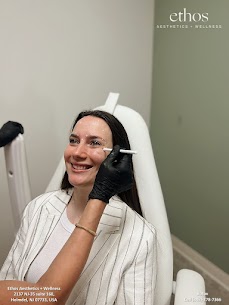
The injection portion is brief. After cleansing, we typically place tiny blebs of botulinum toxin in three to five points per side, arranged like a soft fan around the lateral canthus. The sensation is a quick sting that fades within seconds. Ice or vibration can make it more comfortable. A standard crow’s feet session takes 10 to 20 minutes including setup.
Aftercare is minimal. I advise patients to stay upright for four hours, avoid rubbing the area, skip strenuous workouts until the next day, and hold off on facials or massages for 24 hours. You can wear makeup after a few hours once any pinpoint bleeding has settled. Most people head back to work right away.
Dosage: how much is typical and why it varies
There is no single “right” number of units for crow’s feet. Instead, there is a sensible range shaped by your anatomy, your goals, and your muscle strength. For most adults, a common total dose is 6 to 12 units per side with onabotulinumtoxinA (commonly known as Botox Cosmetic). Lighter preventive treatments may use 4 to 6 units per side. For robust orbicularis oculi muscles or deeper etched lines, 12 to 16 units per side may be chosen, sometimes delivered over more injection points to feather the effect.
Different brands of botulinum toxin have different unit potencies and diffusion characteristics. If your provider uses abobotulinumtoxinA, incobotulinumtoxinA, or prabotulinumtoxinA, the unit count will differ based on product-specific conversion estimates. For example, abobotulinumtoxinA often uses a higher unit number to achieve a comparable clinical effect. An experienced botox specialist will adjust dosage and dilution based on the product and your needs rather than aiming for a fixed number.
Dose also changes with age and skin quality. A patient in her early 30s with early fine lines who wants subtle botox might do well at the low end of the range. A patient in his late 40s with strong smiling muscles may need more units to balance the pull without flattening the smile. I often start conservative for a first-time patient and bring them back at two weeks for a touch up if needed. This staged approach is safer and more predictable than overshooting on day one.
Injection patterns that look natural
Crow’s feet are three-dimensional. When you smile, the skin bunches like a fan spreading outward and slightly downward from the eye’s corner. A natural-looking botox crow’s feet treatment respects that pattern. In practice, that means placing small aliquots in several points rather than a big dose in one or two.
The most common pattern uses three injection points per side, sitting lateral to the orbital rim. In patients with wider smiles or lines that extend further, I add one or two micro-doses along the lower fan to soften the tail without affecting cheek elevation. I avoid drifting too close to the zygomaticus major, the muscle that lifts the mouth corner. Over-treating the lower lateral points can blunt a grin and create a picture-taker’s worst nightmare, the smile that does not reach the eyes.
An injector who knows the terrain will also respect the orbital rim. Toxin should be placed outside the bone rim to reduce the risk of diffusion into unwanted muscles. A light touch is key. Heavy dilution or high volume per point can increase spread and create a uniform, frozen look that rarely pleases.
Onset, peak, and how long results last
Botox for crow’s feet does not work instantly. You may start to notice softening at day 3 or 4. Most patients reach peak effect between days 10 and 14. Two weeks is the standard follow up window for assessing symmetry and making small adjustments.
Longevity in this area typically runs 3 to 4 months. Some patients, especially first-timers or those with faster metabolisms, see closer to 2.5 to 3 months. Others maintain results for 4 to 5 months, especially after consistent repeat botox treatments. The orbicularis oculi is an active muscle, and frequent smiling can make the effect fade a bit sooner than in the frown lines. If your schedule is busy or you are budget-sensitive, aligning your maintenance plan with seasonal events or photo-heavy months is a smart way to prioritize.
Anecdotally, I see faster fading in distance runners, those who do high-intensity training several days a week, and very expressive patients who smile big and often. That does not mean you should change your lifestyle, only that your maintenance plan should reflect how you live.
Expected results and what realistic looks like
The best crow’s feet botox results look a lot like you on your best rested week. Smiling should still lift your cheeks. The lines that used to spike sharply now look more like a watercolor wash. At rest, the etched tracks soften gradually with repeat sessions as the skin stops folding as deeply and collagen remodeling catches up.
If your lines are very etched, particularly in sun-damaged skin, you will likely still see fine creases at peak smile. That is normal and often desirable. Trying to erase every trace of movement risks a flat, mask-like effect, or worse, shape changes in the lower eyelid that draw the eye for the wrong reasons. Botox is excellent at Holmdel botox reducing dynamic wrinkles. For stubborn static wrinkles, it is one tool among several.
Maintenance: timing, touch ups, and when to adjust
After your first cosmetic botox session, book a review at two weeks. Small asymmetries can be corrected with micro-doses at that time. From there, most people repeat every 3 to 4 months to keep lines consistently soft. If you prefer a more gradual fade, you might schedule at 4 to 5 months and accept a few weeks of more movement before the next visit.
Your maintenance dose can change. If you want a little more smile crinkle back, ask your injector to drop the units by 10 to 20 percent. If you feel the effect does not last long enough, increasing by a few units or adding a strategic injection point may help. For patients who start with baby botox, a stepwise increase over first and second visits often finds the sweet spot for both look and longevity.
Safety, side effects, and how to avoid pitfalls
Botox injections for wrinkles around the eyes are widely performed and generally safe when delivered by trained professionals. The most common side effects are minor: tiny bruises the size of a sesame seed, mild swelling, or a headache that resolves within a day or two. Small injection-site redness fades within an hour.
Less common issues include under-correction, over-correction, or asymmetry. These are usually fixable at the follow up visit. With precise technique and conservative dosing at the lower lateral points, the risk of smile alteration is low. Rarely, toxin can spread to nearby muscles and cause a subtle change in lower eyelid position. Careful placement outside the orbital rim and appropriate dilution limit this risk.
If you are new to botulinum toxin injections, discuss medical history, bleeding risk, and any neuromuscular disorders at the botox consultation. Blood thinners and supplements like high-dose fish oil, ginkgo, or vitamin E can increase bruising. Pausing nonessential supplements for a week beforehand, with your physician’s approval, can help. If you are pregnant or breastfeeding, defer cosmetic botox. If you have an active skin infection or rash in the treatment area, wait until it clears.
Adverse reactions to the actual toxin are very rare at cosmetic doses. The dose used for crow’s feet is small compared with medical botox applications for spasticity or migraines. Still, any unexpected symptoms such as eyelid droop or vision changes warrant immediate contact with your provider.
Cost, value, and how to budget
Botox price is typically quoted per unit or per treatment area. In most US markets, the per-unit botox cost runs roughly 10 to 20 dollars per unit depending on the clinic. For crow’s feet, that means a typical session costs in the low-to-mid hundreds, influenced by the number of units and the injector’s expertise. Some botox clinics offer packages, membership pricing, or botox specials during slower months. Deals can be reasonable, but verify credentials and product authenticity. Bargain hunting makes less sense if it risks an inexperienced hand near your eyes.
Value depends on your goals. If photos, client-facing work, or personal preference make smooth eye lines a priority, three to four sessions per year may be worth building into your self-care budget. If your lines bother you mostly in bright sun, you might pair treatments with quality sunglasses and schedule botox around sunny seasons rather than year-round.
Combination treatments for etched lines and skin quality
While botox is the cornerstone for dynamic wrinkles, it does not resurface the skin. When crow’s feet are etched at rest, combining modalities usually produces the best outcome. Light fractional resurfacing, microneedling with radiofrequency, or well-placed superficial chemical peels can improve texture and stimulate collagen. A cautious, low-density fractional laser around the eyes, performed by experienced hands, softens crepe-like skin over a series of sessions.
For deeper lines that persist at rest, a micro-drop of soft hyaluronic acid filler in very select cases can support a groove, though this area is unforgiving and not a first-line approach. I often prefer to optimize botox first, then reassess with skin quality treatments before considering focal filler. Medical-grade skincare with retinoids, peptides, and diligent sun protection supports and prolongs the results of cosmetic botox injections.
Preventive botox and the “baby” approach
Younger patients ask about starting early. Preventive botox or baby botox uses smaller doses to reduce repetitive folding before lines etch in. For a person in their late 20s or early 30s with early fine lines and strong expressions, 4 to 6 units per side a few times per year can be enough. The goal is subtle botox that no one can spot, only an easier time keeping the eye area smooth.
That said, not everyone needs preventive treatment. If your skin quality is excellent and your lines only appear at maximal smile, a solid skincare regimen and sun control may carry you a long way. Consider your tolerance for movement versus smoothness, your budget, and your cosmetic priorities. A short trial with a conservative dose is a safe way to learn how your face responds.
Technique nuance that separates good from great
Lateral canthal botox looks straightforward on paper, yet small choices make big differences. Needle angle and depth shift the effect by millimeters. Too superficial and you risk more bruising with less muscle impact. Too deep or too medial and the product can diffuse where it should not. I prefer tiny aliquots per point, placed with the muscle engaged so I see the lines while I inject. This improves accuracy, like painting with the canvas stretched.
Another nuance is balancing the upper and lower fan. If you only treat the upper lines, the untreated lower lines can seem more prominent when you smile. If you only chase the lower lines, you can inadvertently weaken the smile or influence the lower eyelid. The art is in distributing a finite dose where it yields a blended softening without a discernible edge to the effect.
How crow’s feet treatment differs from forehead and frown line botox
Patients who have had forehead botox or frown line botox are sometimes surprised that crow’s feet dosing and longevity differ. The frontalis and corrugator muscles are thicker and their treatments can last slightly longer, often 3.5 to 5 months. The orbicularis around the eyes is thinner and highly active, so effects trend closer to the 3 to 4 month range. The unit counts are also different. A typical forehead botox treatment might use 8 to 16 units, while frown lines often use 12 to 25 units depending on strength and anatomy. Crow’s feet usually require smaller per-point doses but multiple points for a feathered finish.
Movement goals differ as well. In the forehead, we preserve enough lift to keep brows from feeling heavy. Between the brows, we reduce a scowl without flattening the natural brow shape. At the eyes, we keep a smile alive while smoothing the fan lines. In all three zones, an eye for proportion and restraint yields the most natural looking botox outcomes.
Choosing a provider and what to ask
Not all injectors approach crow’s feet the same way. Look for a trusted botox provider who treats the periorbital region routinely. Ask about their experience with botox for crow’s feet, their approach to dosing for first-timers, and their plan for follow up. Before and after photos can help, especially if they show results at full smile rather than only at rest. A top rated botox clinic should be transparent about botox dosage, cost, and expected longevity, and they should encourage questions.
If you have a history of dry eye, prior eyelid surgery, or unusual asymmetry around the eyes, bring it up early. These details change the plan. An injector who listens closely, examines in motion, and explains trade-offs clearly is worth prioritizing over the cheapest botox deals.
A practical timeline for your first treatment
If you are planning for an event, work backward. You will look your best between days 10 and 45 post-treatment. Side effects are minimal, but a small bruise can happen. Schedule your botox appointment at least two to three weeks before photos or a big trip. If you want to test-drive baby botox first, plan a month earlier so you can adjust the dose at the next session if you want more or less movement.
Think of the first treatment as data gathering. Your two-week review is where fine-tuning happens. By the second or third round, your injector will have a precise map for your face, and you will have a clear sense of your preferred balance between smoothness and expression.
Frequently asked pragmatic questions
Does Botox hurt? The injections feel like quick pinches. Ice or vibration reduces sting. Most patients rate it as minor.
Will people notice? Friends often say you look rested. The effect is subtle if dosed well. You will still smile normally.
Can I combine crow’s feet botox with other areas? Yes. Many patients treat frown lines and forehead lines in the same visit for balanced facial botox. Treating the upper face together can look more harmonious.
What if I do not like it? The effect is temporary. It will wear off over a few months. That said, a careful, conservative first session reduces the chance of a look you dislike.
Is there downtime? Minimal. Expect mild redness for an hour, possible pinpoint bruising for a few days that concealer can cover, and otherwise normal daily activities.
When results plateau and how to pivot
If repeated botox treatment flattens movement but your etching persists, it is time to pivot toward skin interventions rather than more units. Think of botox as reducing the metal fatigue on a hinge. If the door itself is worn, you also need to refurbish the wood. Medical-grade skincare, fractional resurfacing, or microneedling with radiofrequency can improve texture and fine lines so that a standard botox dose looks better and lasts as expected. I have seen patients cut their unit count once the skin side of the equation improved.
For long-standing sun damage, commit to UV protection. A good pair of polarized sunglasses reduces reflex squinting and protects collagen, which complements botox effectiveness. The cheapest “add-on” to any botox facial treatment is consistent sunscreen use.
The take-home perspective
Crow’s feet botox is a small procedure with outsized impact on how rested and approachable you look. It works best when the plan is personal: dosage tailored to your muscle strength, injection points placed with respect for your smile, and maintenance aligned with your lifestyle. Results unfold over two weeks, remain steady for several months, and evolve with repeat botox maintenance. The risks are low with a skilled injector, and the effect should feel like you at your most refreshed.
If this is your first time, start with a thoughtful consultation and a conservative dose. If you have been doing it for years, revisit your settings as your face and skin needs change. Botox is a tool, not a template. Used well, it makes space for your expressions to show without letting lines write the whole story.